Last week, we considered how a Samaritan Church combines charity with justice and confronts “structures of sin.” We conclude this series by exploring what is meant by “development”. What does Catholic Social Teaching say about development?
When we hear of development, we may picture skyscrapers, highways, bridges, hotels and new housing. These are important since good infrastructure connects communities, creates opportunities and improves lives. But buildings and economic growth are means, not the final goal. A country can become wealthier on paper while many of its people remain unsafe, poor, excluded or unable to flourish.
Development is More Than Economic Growth
St Paul VI taught that authentic development cannot be restricted to economic growth. It must promote “every person and the whole person” (Populorum Progressio, 14). Pope Leo XIV makes the same point in Magnifica Humanitas: development is truly human when it places people, rather than the accumulation of wealth, at its center. It must include the spiritual, cultural, moral and relational dimensions of life while respecting creation (cf. MH 83–84).
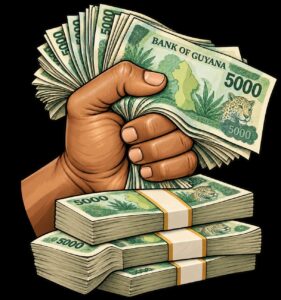
True development goes beyond asking how much money we are making from oil and other revenue streams to asking whether people in Guyana are healthier, safer and better educated. Are families and communities flourishing? Are cultures and languages respected? Do Guyanese trust public institutions more? Are people growing in responsibility, character and concern for one another? Is creation being protected? Is Guyana growing morally or only economically?
Jesus reminds us that “one does not live by bread alone” (Mt 4:4). Bread is necessary, but it is not sufficient. We need material security, but we also need meaning, culture, belonging, love, beauty, faith and hope. We cannot live on money alone.
Development Is Relational
Catholic social teaching describes development as relational because life itself is relational. Laudato Si’ identifies three fundamental and closely connected relationships: with God, with our neighbour and with the earth. It also notes that sin wounds us inwardly, damaging our relationship with ourselves (cf. LS 66, 70). These dimensions are interwoven. When one is harmed, the others eventually suffer.
Development, therefore, should strengthen our relationship with God, ourselves, other people and creation. Economic activity that destroys communities or poisons land and water cannot be called fully human development. Neither can material progress accompanied by loneliness, violence, corruption or loss of cultural identity.
Let us consider education. Constructing a school is valuable, but the building alone is not development. Teachers must be properly trained and supported. The curriculum should be relevant to the learners’ lives, language and culture. Education should develop not only examination results, but also curiosity, conscience, character, relationships and the ability to serve society. The true measure of the school is the flourishing of its students and community. Are schools overly focused on academics at the expense of moral and psychosocial development?
Oil, Mining and Moral Discernment
Guyana’s oil resources can provide revenue for better education, healthcare, housing, transport and protection for the vulnerable. Catholic teaching does not say should reject the use of natural resources. However, it requires us to consider the costs, benefits and risks for everyone.
Oil extraction and use contribute to carbon emissions, global warming and climate change. These, in turn, threaten coastlines, water supplies and food security, with the poor usually suffering first and worst (e.g. remote hinterland communities dependent on farming for food). Responsible development therefore requires strict environmental safeguards, transparent management of revenue, investment in renewable energy, and a realistic discussion about the scale and duration of our dependence on oil.
The same discernment applies to mining. Mining creates employment and income, but it can also damage forests, rivers, health, social connections, Indigenous lands and community life. Financial profit cannot repair every destroyed relationship. Those most affected must have a genuine voice in decisions, and companies and governments must be accountable for long-term environmental and social costs.
The Common Good
The Catechism defines the common good as the social conditions that allow people, as groups or individuals, to reach their fulfilment “more fully and more easily” (CCC 1906). It is not simply what benefits the majority, and certainly not what enriches a small minority. It includes everyone, especially the poor and marginalized.
The MV Barima tragedy should therefore remain part of our national examination of conscience. Investment in safe, dignified and dependable public transport is not less important because its users are ordinary people or residents of distant communities. Budgets, maintenance schedules, inspections and safety standards are moral matters because they affect human lives. Our priorities reveal whose lives we value.
Before calling any project “development,” we should ask whether it protects human dignity. We should also ask whether it serves the poor as well as the powerful. Were affected communities heard? Does it strengthen relationships? What will it do to land, water and future generations? Is its management transparent?
“What does it profit a person to gain the whole world and forfeit their life?” (Mk 8:36). We might ask the same of a nation. What would it profit Guyana to gain impressive buildings and great wealth if we lose our communities, our ethics, our environment or our soul?
True development enables every person and community to flourish within a healthy web of relationships. It puts wealth at the service of life, power at the service of participation, and progress at the service of the common good. That is the development worthy of the Guyana we hope to build.