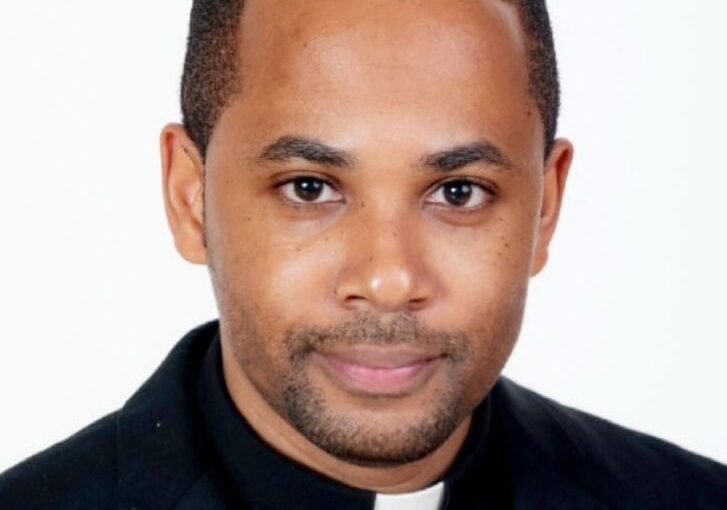
“If we want more vocations in Guyana, we must create a culture where young people understand and live their faith, hear God’s call, discover their gifts, and are encouraged to answer with courage.“
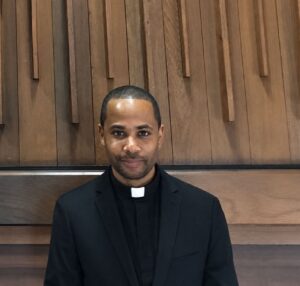
On June 24th, I celebrated my fourth anniversary of priestly ordination and my fifteenth year as a Jesuit. Anniversaries invite gratitude and as I thank God for my own vocation, I also thank my family, the Church, my teachers, communities, and the wider culture that helped form me. Ordinations are joyful occasions in our diocese, but they are also very rare. That is why we need to speak more openly about vocation and ask how we can create a culture where young people feel free to listen to God’s call and live their faith.
The Call Leaves a Mark
I first learnt the word “vocation” not from Church, but from my mother. She often said that being an educator was her vocation. For her, and for many teachers like her, teaching was not about making millions. It was about service. We all know teachers who live simply, work quietly, and go beyond what is required to educate the next generation, often using their own time and resources.
My mother used to tell my brother and me that you could identify female teachers in public places, like bank lines, by looking at their shoe heels, often worn down from pacing up and down in classrooms. That image stayed with me and reminded me that vocation leaves marks on us.
The word “vocation” comes from the Latin vocare, meaning “to call.” The Catechism teaches that God calls every person to seek Him, know Him, and love Him with all their strength (CCC 1). St Paul also reminds us that “there are varieties of gifts, but the same Spirit” and that these gifts are given “for the common good” (1 Corinthians 12:4–7).
This means EVERY person has some God-given gift or talent. I often tell young people this. Sometimes we discover our gifts through exposure, encouragement, challenges, and success. Imagine if Lionel Messi had never been exposed to football, or Mozart had never touched a piano. The world would have been robbed of extraordinary gifts.
Love is the driving force behind vocation. A vocation is not simply doing what you like. It is doing what you love, in service of others, for the God who is love.
As a priest, I have found it deeply rewarding to serve people in moments when they have no one else to turn to. Some elderly people I visit say they have children and relatives, but everyone is busy. They are grateful for a few minutes of presence. The same is true for those in hospital, those grieving, and those carrying heavy burdens. A priest is called to serve in both pleasant and unpleasant moments of people’s lives. Every Eucharist, every sacrament of Reconciliation, and every word or action is done to remind people that God loves them.
Building a Culture of Vocation
If we want more vocations in our Church and society, we must build a culture of vocation. For me, this means four things: prayer, encouragement, engagement, and example.
First, prayer. Jesus says, “The harvest is plentiful, but the labourers are few; therefore, ask the Lord of the harvest to send out labourers into his harvest” (Matthew 9:37–38). I find this verse consoling because it shows that Jesus experienced what we experience today. There is plenty good work to be done like proclaiming the Gospel, caring for the poor, visiting the sick, teaching the young, and responding to those who fall through the cracks. Yet the labourers are few.
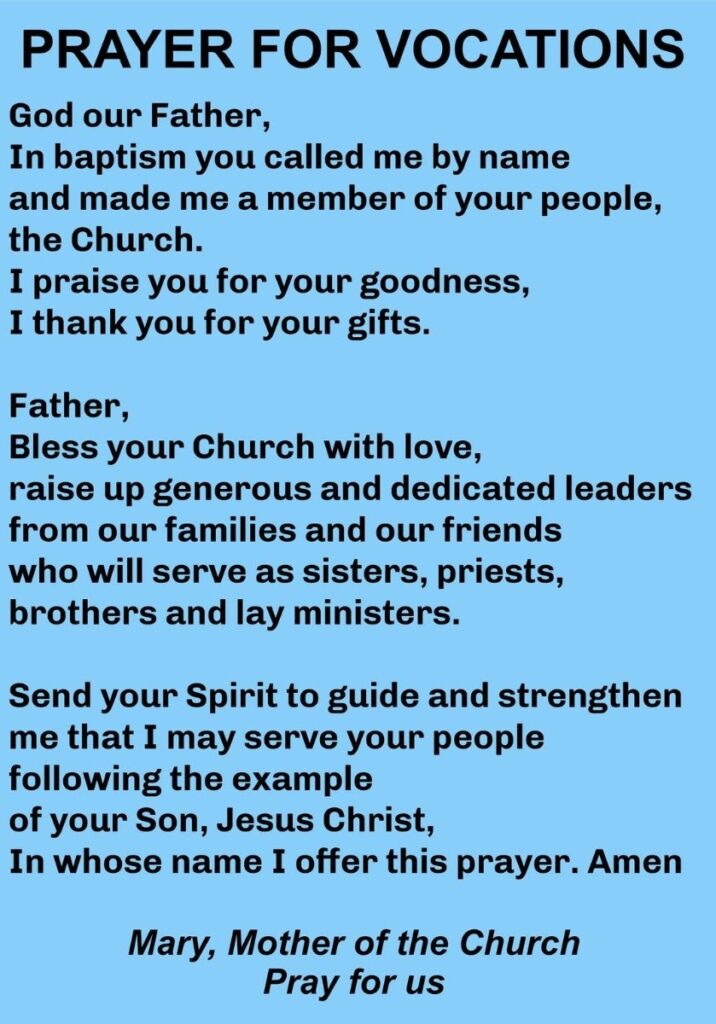
In the Jesuit order, no Guyanese has entered after me in these fifteen years. That is a sobering reality. However, Jesus’ response is not despair but prayer. Praying for vocations is non-negotiable in our families, parishes, and homes. We must pray and teach our young people to pray. It is often in silence, Eucharistic adoration, and prayer that people begin to hear God’s voice.
Second, encouragement. Vocations grow where people are encouraged. Many of you know I am a musician. I only overcame stage fright and mistakes in public performance because people encouraged me. Sometimes our culture zooms in on the negative and magnifies mistakes. That makes people afraid to try.
We see this even in Church. Many people are afraid to read at Mass because they fear that if they mispronounce one word, people will talk about it all week. Yes, give feedback. But do not crush people. “Encourage one another daily”. (Hebrews 3:13).
A word also to parents. If your child expresses interest in a vocation you did not imagine for them, do not simply shut it down. Some parents say they want priests, sisters, teachers, nurses, and servants of the poor, but when their own child shows interest, they say, “No, not you. Not my precious child.” Well then, who? Make it make sense!
Yes, parents have dreams for their children. But God may also have dreams for them. A healthy Catholic spirituality must leave room for God’s call.
Third, engagement. I speak often with young people, and I am surprised how many say no one has ever asked them seriously what their gifts are, what they love, or what they feel called to do. Too many leave school with no deeper sense of purpose beyond “Ah want mek money” or “get plenty subjects.” There is nothing wrong with working hard and wanting a good life. But life is more than earning.
We need to ask young people: What brings you joy? What are you good at? What problems in the world move your heart? How might God be calling you to serve?
Finally, example. Young people need to see adults who live their vocation and faith with joy, not bitterness and criticism. It is better to light a candle than curse the darkness. Don’t become a person who critiques everything but offers no solutions. If every teacher, nurse, parent, priest, religious, farmer, public servant, and businessperson lived their work as service, our Church and society would be transformed.
I am grateful for my vocation and for the culture that created it. May we all continue to discern our vocation, encourage one another, and ask God to sustain us in the work He has called us to do. To anyone discerning their vocation and reading this, if today you hear God’s voice, “do not harden your hearts” (Psalm 95:8).