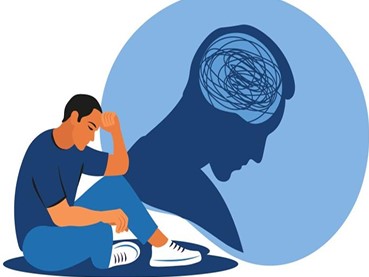
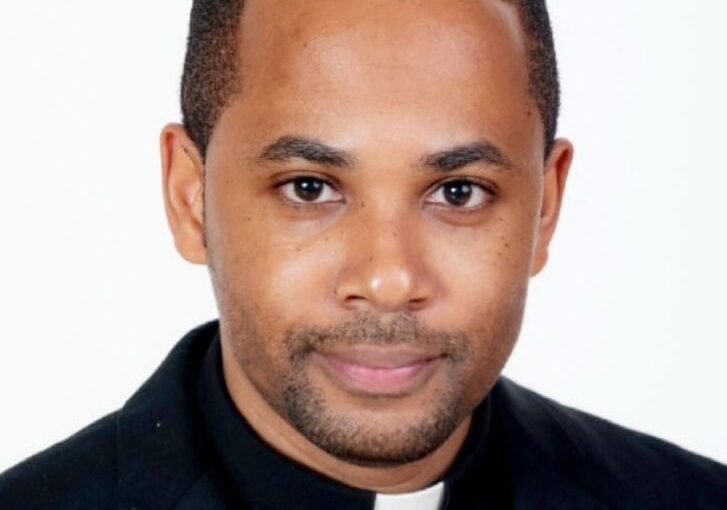
Men, how are you? When last has someone asked you that question?
June is observed in many places as Men’s Mental Health Month, and it is also the month when we celebrate Father’s Day locally. These are good moments for us, as Church, to ask how the men among us are really doing. When we notice their absence on Sundays.
what are we doing to reach out?
Many men are taught, directly or indirectly, that they must always be strong, provide for everyone, fix every problem, and never show weakness. In our Guyanese context, phrases like “I hate men” or “man is dawg” may be said jokingly, but they can slowly damage how men see themselves. Such stereotypes reduce manhood to toughness, money, and sexual performance.
The Gospel, as always, offers a better vision. Men are not “dawgs”. A man is a son of God. His dignity does not only come from his job, salary, muscles, status, or ability to provide. Like every person, his worth comes from being created and loved by God.
What We Believe
The Church teaches that the human person is a unity of body and soul. The Catechism says that the human person is “at once corporeal and spiritual” (CCC 362), and that the human body “shares in the dignity of ‘the image of God’” (CCC 364). God does not care only about our souls while ignoring our bodies, minds, and emotions. God loves the whole person.
St. Paul reminds us, “Do you not know that your body is a temple of the Holy Spirit within you?” (1 Cor 6:19). This does not mean we worship the body or become obsessed with appearance. It means that the body is good, sacred, and entrusted to us.
The Fifth Commandment says, “You shall not kill” (Ex 20:13). The Catechism understands this not only as a command against murder, but as a call to protect life. “Life and physical health are precious gifts entrusted to us by God. We must take reasonable care of them” (CCC 2288). Mental health must be included in this care. Depression, anxiety, addiction, burnout, trauma, and suicidal thoughts are not signs that someone lacks faith. Please, let us stop telling people to “just pray more.” These struggles need compassion, support, prayer, and where necessary, professional help.
Why it Matters for Men
Many men suffer silently. We have been taught not to cry or show emotion. Men may feel ashamed to say, “I am tired,” “I am sad,” “I am lonely,” “I am afraid,” or “I need help.” Some men drink, smoke, vape, use drugs, overwork, watch pornography, or withdraw emotionally because they do not know what to do with their pain. Whenever people complain about men who drink too much, I often point out that drinking is sometimes a coping mechanism and a symptom of something deeper. Pastoral accompaniment means helping to uncover the deeper drivers of alcohol abuse and other irresponsible behaviour.
Men need to hear that sadness is not weakness. Jesus wept at the death of Lazarus (Jn 11:35). In Gethsemane, he told his disciples, “My soul is overwhelmed with sorrow to the point of death. Remain here and stay awake with me” (Mt 26:38). If Jesus could express sorrow, then sorrow is not shameful. If Jesus could ask others to remain with him, then asking for help is not failure. No man is an Island! We all need support.
At the same time, pain never excuses sin, abuse, or violence. When men are not given healthy spaces to speak, they may lash out in destructive ways, including in relationships or against themselves. The Christian response is healing, accountability, and support.
How We Live It
Christian care for men’s mental health must be holistic and include body, mind, and soul.
For the body, men should take ordinary but important steps like regular exercise, adequate rest, medical check-ups, healthy eating, and moderation with alcohol and food. Regular physical activity has been shown to reduce symptoms of depression and anxiety. St Thomas Aquinas taught that grace builds on nature. God’s grace does not make us less human but strengthens and perfects our humanity. We must therefore care of our human nature.
For the soul, men need prayer. Prayer does not magically remove every burden, but it roots us in God. The Psalms remind us, “The Lord is near to the brokenhearted, and saves the crushed in spirit” (Ps 34:18). Jesus says, “Come to me, all you that are weary and are carrying heavy burdens, and I will give you rest” (Mt 11:28).
Men, you carry many burdens. The Lord invites you to give them to him. You need rest. Prioritize Sundays as a day for family, Church, and renewal. It is always wonderful to see men coming to Church with their children and wives and not simply staying at home to catch up on sports or sleep. St. Paul tells husbands, “love your wives, just as Christ loved the church and gave himself up for her” (Eph 5:25), and tells fathers to bring up their children “in the discipline and instruction of the Lord” (Eph 6:4). The example set by men will help inspire the next generation of Catholics.
Men also need real relationships. Work is important, but work cannot be a man’s whole identity. Families, parishes, and communities must become places where men can speak honestly without being mocked. Sometimes the most Christian thing we can do is ask a father, brother, son, husband, priest, or friend how they are really doing.
St. Dymphna, often invoked as a patroness of those suffering from mental illness and emotional distress, reminds us that mental suffering is not outside God’s care.
Men, your pain is not shameful. Your life is not a burden. You are not only what you produce. You are not only your mistakes. You are not only your struggles. You are a beloved son of God. Take care of your body. Guard your mind. Nourish your soul. When the burden is heavy, reach out, so that we can care for you. May St. Joseph, husband of Mary and earthly father of Jesus, protect, guide, and inspire you.