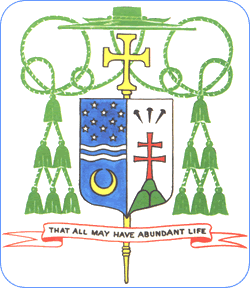
“I came that they may have life, and have it abundantly” (John 10:10)
These words of Jesus give us a beautiful way to understand the Catholic “culture of life”. God does not want us merely to exist. He wants us to live fully, with dignity, love, peace, and hope. The Church teaches a consistent ethic of life. This means that human life must be protected and respected from womb to tomb, i.e., conception until natural death.
Why are our lives sacred?
Every human being has dignity (precious value) because we are all created in the image and likeness of God (Genesis 1:27). St John Paul II, preached of a culture of life to refer to a society that respects and cherishes all human life, especially the most vulnerable. This culture of life includes the elderly, the sick, the unborn, the poor, the migrant/refugee, the prisoner, the person with a disability, the victim of violence, and even those who have done wrong.
What We Believe
The Catechism teaches that “human life is sacred” because from its beginning it involves the creative action of God (CCC 2258). Life is not something we gave ourselves, but a gift. Because of this, no one has the right to treat human life as disposable.
What about murderers? Don’t they deserve the death penalty? A culture of life shapes how we think about crime and punishment. People are often shocked and surprised to learn that the Catholic Church consistently opposes the dealt penalty. The Church teaches that the death penalty is “inadmissible” because it attacks the dignity of the human person (CCC 2267). Even a person who has committed a terrible crime does not lose their dignity before God. Justice is necessary, but revenge is not Christian. St John Paul II forgave the man who shot him as he was on his way to the hospital. Jesus forgave those who executed him as he hung on the cross (see Luke 23:24). The Church believes in the safe detention and rehabilitation of those convicted.
More well known is that the Church opposes abortion. From the first moment of conception, human life must be respected and protected (CCC 2270). This teaching can be difficult for some people, especially when painful situations are involved: poverty, fear, rape, youth, or lack of support. These situations require compassion, not condemnation. But the Church still insists that unborn life must be protected.
The Church also opposes euthanasia. Euthanasia is the intentional ending of a person’s life in order to eliminate suffering, whether because of sickness, old age, pain, disability, or despair (tired of living). Euthanasia is morally unacceptable because it puts an end to the lives of persons who are sick, disabled, or dying (CCC 2277).
At the same time, the Church does not teach that every possible medical treatment must always be used. A person may refuse treatment that is excessively burdensome, dangerous, extraordinary, or disproportionate to the expected outcome (CCC 2278). For example, an 80 year old refusing chemotherapy. That is not the same as euthanasia. We must not intentionally kill, but we also do not have to prolong suffering by every possible medical means. What we must always offer is care, pain relief, prayer, dignity, and accompaniment.
Why It Matters
Viewing all life as sacred matters because many lives are quietly treated as less valuable. The elderly person may be seen as a burden. The sick person may be seen as useless. The poor may be ignored. The prisoner may be written off forever. The person with Down syndrome, disability, mental illness, or addiction may be treated as less important.
Jesus never looked down at anyone. He showed what is called a “preferential option for the poor”. He touched the sick, welcomed children, forgave sinners, noticed the poor, and showed mercy to those others rejected. The Gospel teaches us that dignity is not based on social class, success, strength, beauty, usefulness or money.
This challenges us in Guyana. Many people complain about harsh or careless treatment in hospitals and health centers. A pro-life society must care for the sick with patience, respect, and compassion. Doctors, nurses, caregivers, and relatives are called to protect not only the body, but also the sacredness of the person. Frequent ethical training for our health workers would help strengthen a culture of life.
Domestic violence and murder are also life issues. Anger, jealousy, alcohol, and poor communication turn homes into places of fear. Violence never solves problems. Jesus taught mercy, forgiveness, and peace.
Substance abuse is also connected to the culture of life. St Paul reminds us: “Your body is a temple of the Holy Spirit” (1 Corinthians 6:19). Alcohol and drug abuse damage both bodies and families. Drunk driving kills innocent people. Addiction contributes to domestic violence, neglect, and broken homes. The Catechism teaches that temperance helps us avoid excess, and it warns against the abuse of food, alcohol, tobacco, or medicine (CCC 2290).
Living a Culture of Life
We choose life when we care for children before and after birth. It is not enough to say that a child should be born. That child must also be loved, fed, protected, educated, and accompanied. Children need stable homes, guidance, affection, discipline, and support.
We choose life when we care for the elderly. We choose life when we visit the sick, feed the hungry, support pregnant mothers, help those struggling with addiction, and encourage families to seek help before violence begins.
We choose life when we reject revenge and believe that even prisoners can repent and change. We also choose life by caring for our own bodies by eating properly, resting, exercising, avoiding excess, and asking for help when we are not well. “You shall not kill” does not only mean that we must not murder. It also calls on us to preserve and protect our lives and the lives of others. Every person matters. Today, let us hear the words of God and “Choose life” (Deuteronomy 30:19)